
13 Oct 2021
HPV stands for Human Papilloma Virus that is extremely common with around 100 sub types of which around 14 are cancer-causing or we can say are high risk. It is a sexually transmitted virus. It is responsible for causing cancer of the cervix, vagina, vulva in females, cancer of the penis in males and cancer of the throat, tongue and anus in both males and females. Types 16 and 18 are the cause of most cervical cancers (more than 80%). Types 31, 33, 45, 52 and 58 cause an additional 15% of cervical cancers.
Some low-risk sub types also cause growths on the skin and mucous membranes in the mouth and vagina, the vulva is called warts. HPV types 6 and 11 cause around 90% of genital warts.
In general, HPV is thought to be responsible for more than 90% of anal and cervical cancers, about 70% of vaginal and vulvar cancers, and 60% of penile cancers. HPV infections do not usually cause any symptoms, and most people will not know they’re infected.
The HPV vaccine protects against many cancers as mentioned above especially cancer of the cervix i.e., the mouth of the uterus. Cancer of the cervix is the second leading cause of death in women in India. Every year 122,000 women are diagnosed and more than 67,000 die of cancer cervix. Fortunately, there is a vaccine that is extremely effective at preventing HPV infection, especially when boys and girls are vaccinated before they become sexually active.
The ideal age for HPV vaccination is 11 to 12, but it can be given to everyone age 9 through 26. It is less effective if given after being sexually active but one can talk to the Gynaecologist about receiving it. The vaccine is approved for people through age 45.
Both boys and girls should take the vaccine.
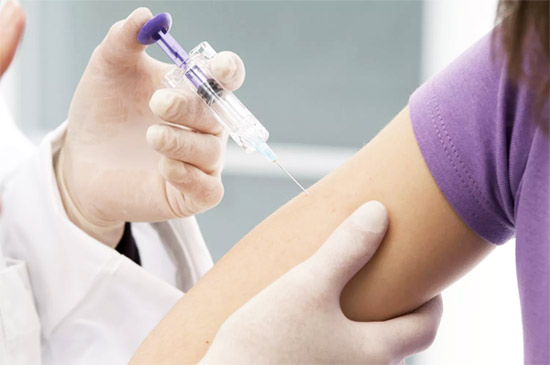
The vaccine is given into the upper arm in three separate doses after 15 years of age. The first dose is administered at the patient’s convenience, the second dose two months after the first dose, and the third dose six months after the first dose. If given before 15 years of age only 2 doses are required 6 months apart.
Studies have shown that the vaccine protects against HPV infection for at least 10 years, although experts expect protection to last for much longer.
The vaccine has been proven to be very safe with no significant risks or side effects. The most common side effects are:
It is almost 100% effective in preventing genital warts and 97 % effective in the cancer cervix especially if given before the person is sexually active.
3 vaccines are available in the market:
At present Gardasil is the best available option for better coverage to 4 subtypes.
After the age of 25, one needs to undergo cervical cancer screening irrespective of the vaccine since the vaccine doesn’t provide 100%protection.
A vaccine is not the cure of HPV, so it won’t cure the already existing infection but it might still provide protection against other subtypes that one isn’t infected with.
It costs around 3500 rupees.
No, it doesn’t affect menstrual cycles or fertility.
Categories: HPV VACCINE
Tags: Gynaecologist , HPV vaccination , HPV VACCINE